Public Speaker

Selected speeches

An archive of ideas, stories and moments.

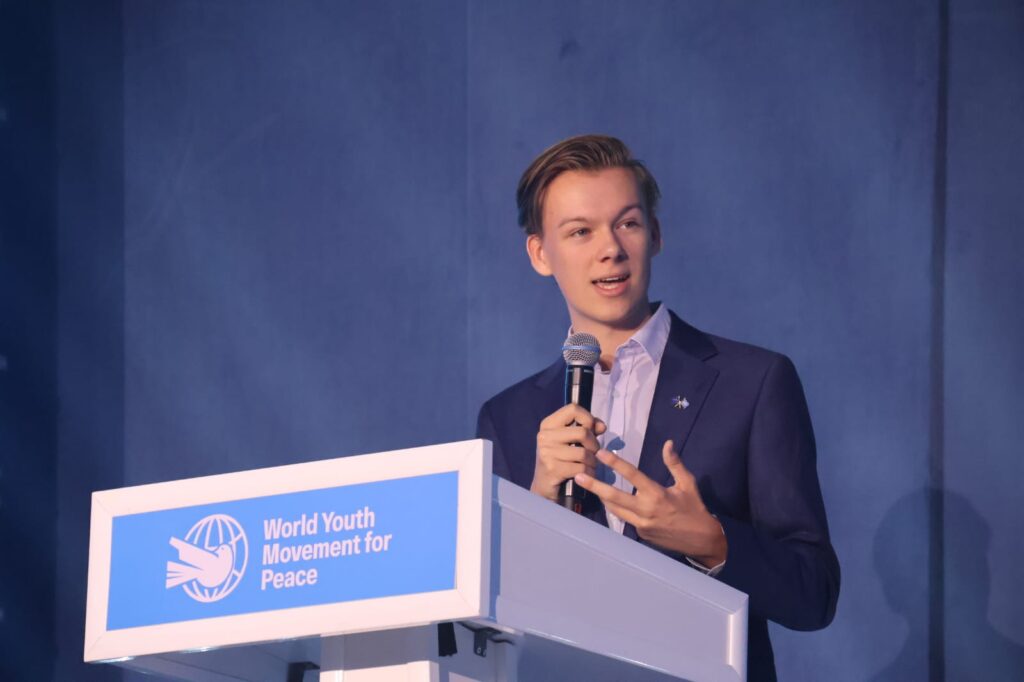
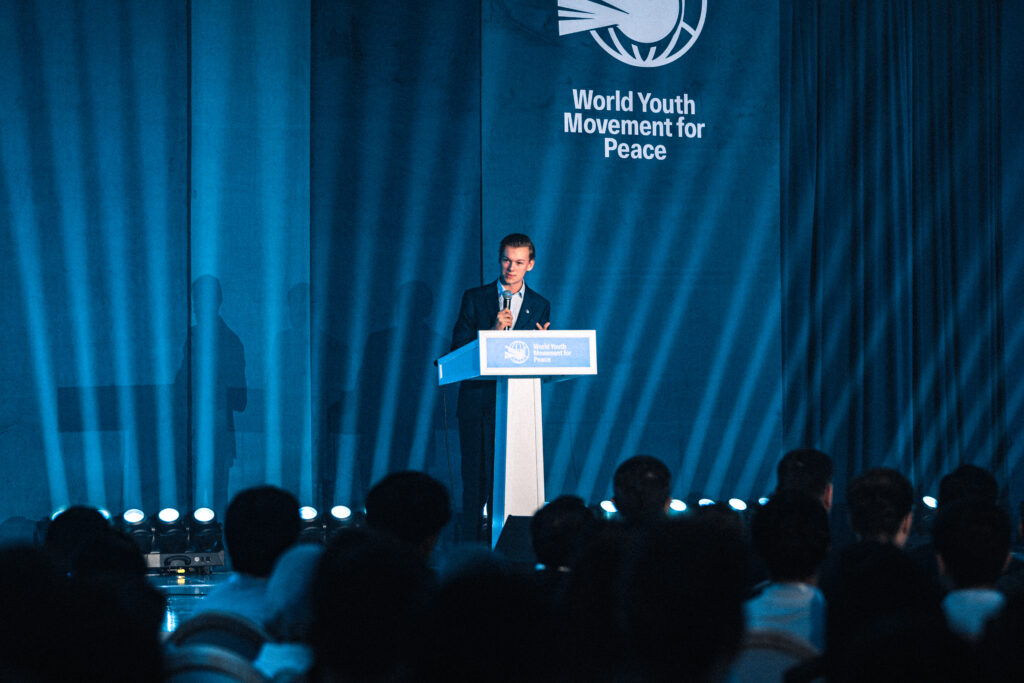
Launch event World Youth Movement for Peace · Tashkent, Uzbekistan · 2026-08-17

World Youth Movement for Peace

It is an honour to be here today on this very important day. I want to congratulate you all with the World Youth Movement for Peace. A movement that is more relevant then ever. As a young person, it feels like everything is moving around us. Countries bombing each other like it’s just their daily […]

Read full speech
World Youth Movement for Peace

It is an honour to be here today on this very important day.

I want to congratulate you all with the World Youth Movement for Peace.

A movement that is more relevant then ever.

As a young person, it feels like everything is moving around us. Countries bombing each other like it’s just their daily business. Human Rights become something optional and freedom of expression is only for those with the right expression.

And we? We are standing on the sidelines. It feels like some older people are gambling with the future they will never experience.

And that is not only frustrating, it’s also a waste of our talents.

Young people need to be trusted, recognised and equipped with means and opportunities to build a peaceful future for their communities.

Because peace built by the few, can never serve the many.

My name is Lars, I am 19 years old and for the past year I had the honour of representing young people from the European Union at the United Nations. At events, during negotiations and in meetings with diplomats.

And for a long time, I thought I needed to hide myself to be heard. I hoped that if you look like a diplomat, talk like a diplomat and move like a diplomat, people would believe you are actually a diplomat and take me seriously.

Hide my age, my inexperience and my idealism behind a serious face, a fancy tie and difficult language.

But I realised something. If I pretend to be a diplomat, I am a very bad one.

The power of young people is exactly

  • That we are young – so we raise the topics that matter to our generation.
  • That we are inexperienced – so we come up with new, bold ideas.
  • That we are idealistic – so we dare to believe in things that might seem impossible.

And the only reason it is interesting for people in power to meet with us… is because of our perspective, our struggles. our dreams.

So never hide yourself.

Never let anyone tell you that you are too young to be heard.

Because the fact that you are young, that you are still learning, still questioning and still dreaming, is exactly the reason you deserve to be at the table.

So, when I realised that we should not hide that we are young, we should show it to everyone, I changed my tie for a football.

Yes, a football.

So at the UN in New York we asked 20 Young people representing youth from all over the world to write a message on this football. About peace, mental health, education, climate and so on.

And after we got kicked out of the UN Headquarters because of our ball, we smuggled it back in and gave it to the Assistant Secretary General of Youth Affairs, one of the highest people in the UN.

We were scared, would he laugh at us? Would he not take us seriously because this is not ‘how it works at the UN?’
No, he was really proud he had our football, and we even played with it until security kicked us out again.

And a few weeks ago, almost a year later, he still remembered us and still has the ball in his office, no way that would have happened if we followed the traditions and wrote a letter.

But if I don’t like young people pretending to be a diplomat, then you might wonder what I think of MUNs…

Well, MUNs are great to understand global governance, to learn how to negotiate and give your opinion, and work with people with a different view.

However, it also reinforces the assumption that young people should wait until they are older before their voice counts in the real world.

It reinforces the assumption that only if you hide your ‘youthness’ behind a suit and difficult language, you matter.

So for the World Youth Movement for Peace, the discussion should not end in MUN halls, but travel all the way to the places real decisions are being made.

Who here dreams about speaking at the United Nations, your parliament or a stage like this?

I understand it, but please believe me if I say this should not be your goal. It is a means. A way to achieve your goal. Something you actually want to achieve.

Which can be a peaceful world. Education for all. Support for young people with mental health problems and go on.

What I would advice you is first to find out what you care about. What you want to change.

Because at international organisations, there are enough people, young and old, whose goal it is to just BE there.

But we need people who are passionate, and eager to make a change. So first find out what you care about, and then where you can make impact.

If it is the UN, you might end up in New York. But if you can make more impact in your university, your community centre or city council, then that’s where you should be.

Because it is not about you, it’s not about me, it’s not about policy makers, ministers or presidents. It is about what we stand for.

Why do we do what we do? Not because you like the fancy trips and great pictures for social media, but… and that is your passion, that is your driving force and that is your purpose.

So, enjoy the coming days. But, please, use your talents and the skills you will develop these days beyond this MUN as well, in the real world.

Because we need you at your university, your city council, your community centres and… at the Real United Nations.

We need you to fight for your believes, build peace, protect our climate and take care of the ones that need it the most.

Because we cannot afford to keep playing diplomats if the real world needs us, we have a future to build.

I thank you
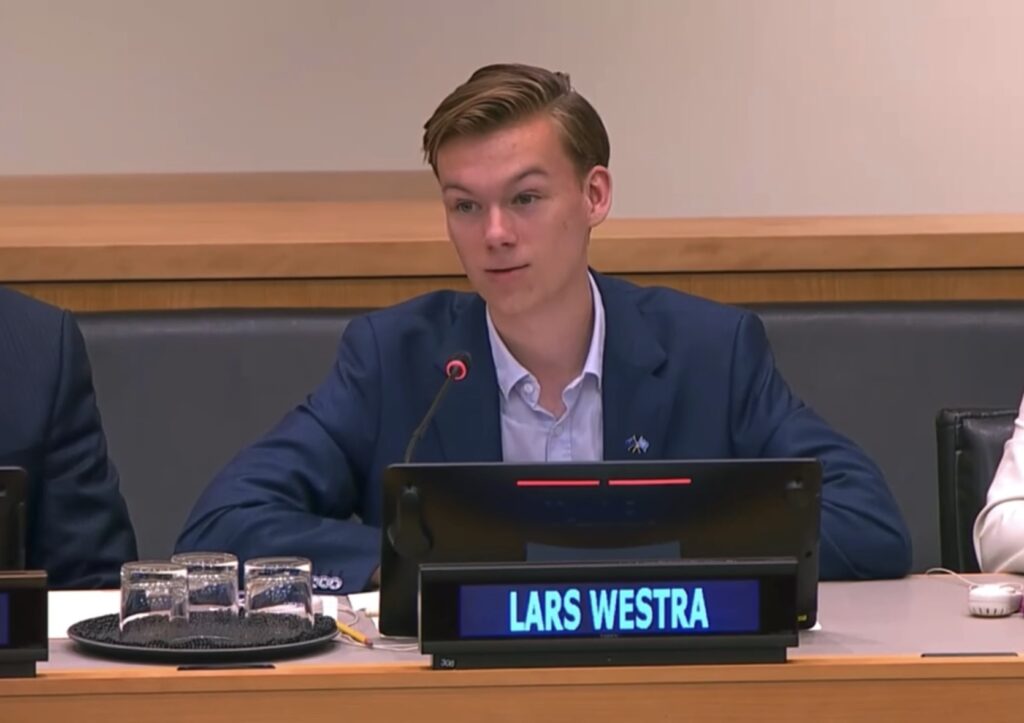
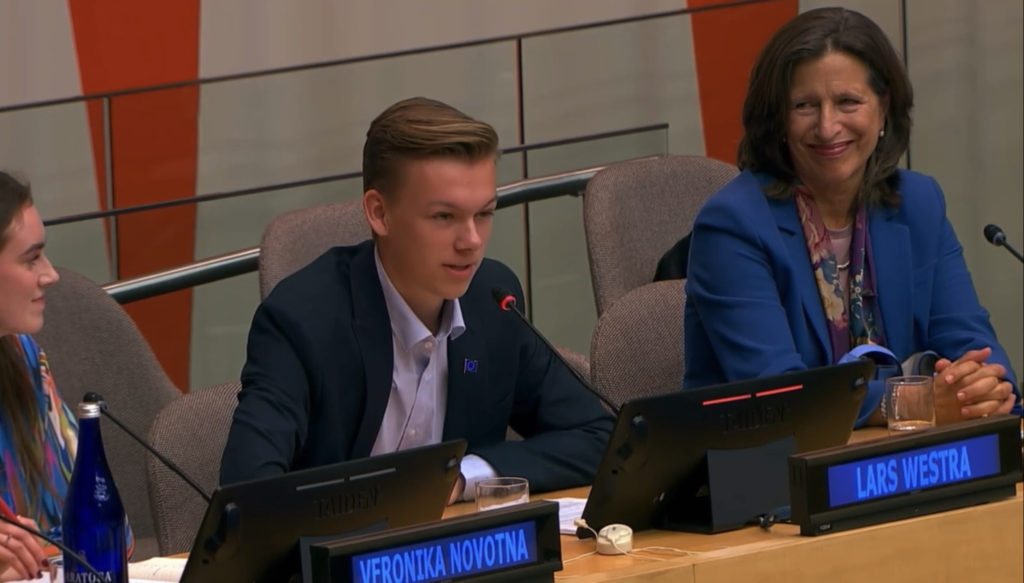
Powering participation: Youth2030 and the pact in action · United Nations HQ, New York · 2026-07-14

Meaningful youth engagement at the EU and UN

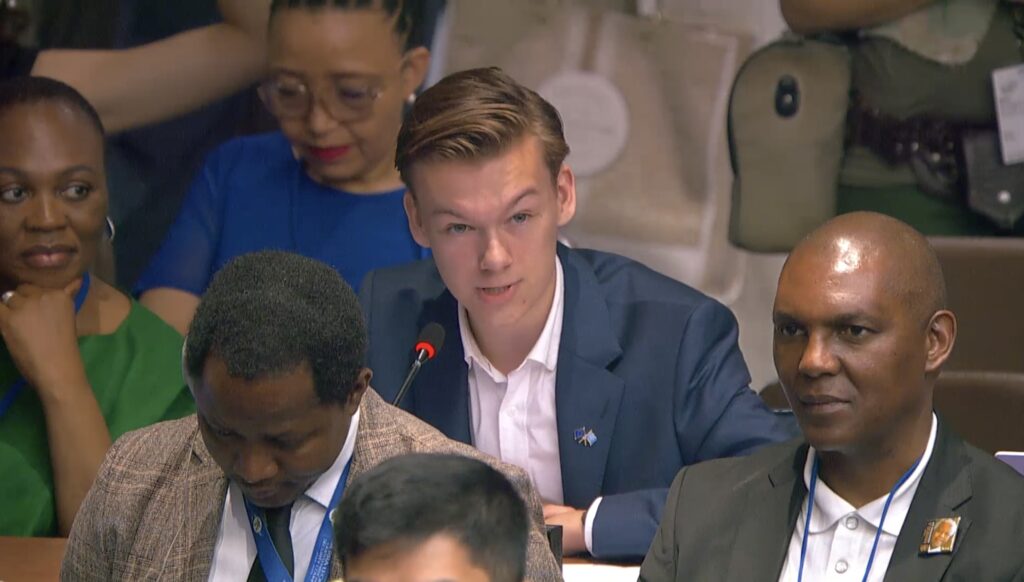
It’s an honour to sit here and speak on behalf of the European Union. Let me start by highlighting how the EU works together with youth, and what we learned, or should have learned at least. First, Every year, all EU commissioners have to organise a youth policy dialogue. The first time, they were not […]

Read full speech
Meaningful youth engagement at the EU and UN

It’s an honour to sit here and speak on behalf of the European Union. Let me start by highlighting how the EU works together with youth, and what we learned, or should have learned at least.

First, Every year, all EU commissioners have to organise a youth policy dialogue. The first time, they were not perfect, they still are not. But everyone is learning. To transform a Q&A into an open conversation. To give young people time to prepare and align priorities. And to find a way in which Commissioners like it. So they WANT to meet with youth and work with them.

Then, Last year the EU Youth, Peace and Security Conference resulted in a network of over 550 young peacebuilders from all regions in the world. By bringing them together, they can meet, learn, and collaborate. Not only with each other, but also with EU Delegations on the ground.

This is also exactly the goal of the AU EU Youth Cluster we are launching next week. A place where young people from Africa and Europe can directly meet with diplomats about their shared challenges, and where they can share experiences, best practises and ideas among each other.

Institutions need to be open to youth, yes. But we need to look at ourselves as well.

When I stepped into the United Nations with 18 years old, I thought I needed to pretend to be a diplomat to be taken seriously. So learn the difficult words and write official letters.Because if I was myself, I was too young, too inexperienced and too naive. But then I realised, this is exactly our power!

We are young, so we can raise concerns of our generation;

We are inexperienced, so we can come up with new, bold ideas;

We are naïve, so we can believe in things that might seem impossible.

Not with perfect diplomatic language that could come straight out of a resolution, but with the honesty and authenticity that these rooms need. That is why our voices matter.

So what did we do? We brought the real stories of young Europeans straight to rooms like these. We stopped writing letters, and instead brought a football with messages from young people from almost all continents into the UN. After we got kicked out by security, we smuggled it back in and gave it to the ASG. And I heard he still has the ball with the messages in his office more than half a year later. No way that would have happened with a letter.

So, if there is one thing you remember from today, let it be that you never hide yourself. Never pretend to be a diplomat. Because your ideas, your concerns and your dreams is what makes it that you deserve to be here.

High Level Political Forum for Sustainable Development, Strengthening alliances for SDG implementation: stakeholder engagement for the 2030 Agenda · United Nations HQ, New York · 2026-07-10

Time travel through the eyes of my grandson

I want to take you on a time travel to the year 2100, through the eyes of my grandson. Today my grandparents came to visit and gave me a small jar of something I did not recognise. They told me it was called honey, and when I asked how it is made, my grandpa said […]

Read full speech
Time travel through the eyes of my grandson

I want to take you on a time travel to the year 2100, through the eyes of my grandson.

Today my grandparents came to visit and gave me a small jar of something I did not recognise. They told me it was called honey, and when I asked how it is made, my grandpa said ‘this is not made anymore, this was made’. ‘Bees made this’, my grandma added, ‘animals as small as your fingertips. I couldn’t believe a small animal could make something so magical, but my grandpa said: That something is small, doesn’t mean it cannot create the greatest things’.

‘If only people had realized this earlier. If only they had moved on with inviting the smallest persons to the biggest tables. When I was young we were already so far… we spoke in meetings with all countries in the world.

‘But did they not listen to you?’ I asked.

No they did, but what they didn’t do was look beyond the safe rooms they were in… to the real world! They had to understand that their plans were meaningless without young people championing them. To not see youth as beneficiaries of their work, but as drivers of it.

But above all, to understand that they were building your life; here in 2100!

‘You know what’, my grandma said, ‘most of them weren’t even here anymore when the bees became extinct. Let alone to see how the world looks today. I wish we could go back in time, to prevent it all.’ I asked her to what year we would have to go, and without a doubt she said 2026. 

2026 was the year we should have realised: we are building the future today, together.

EuroClio annual conference: History and Hope · European Parliament, Brussels · 2026-04-27

History and hope

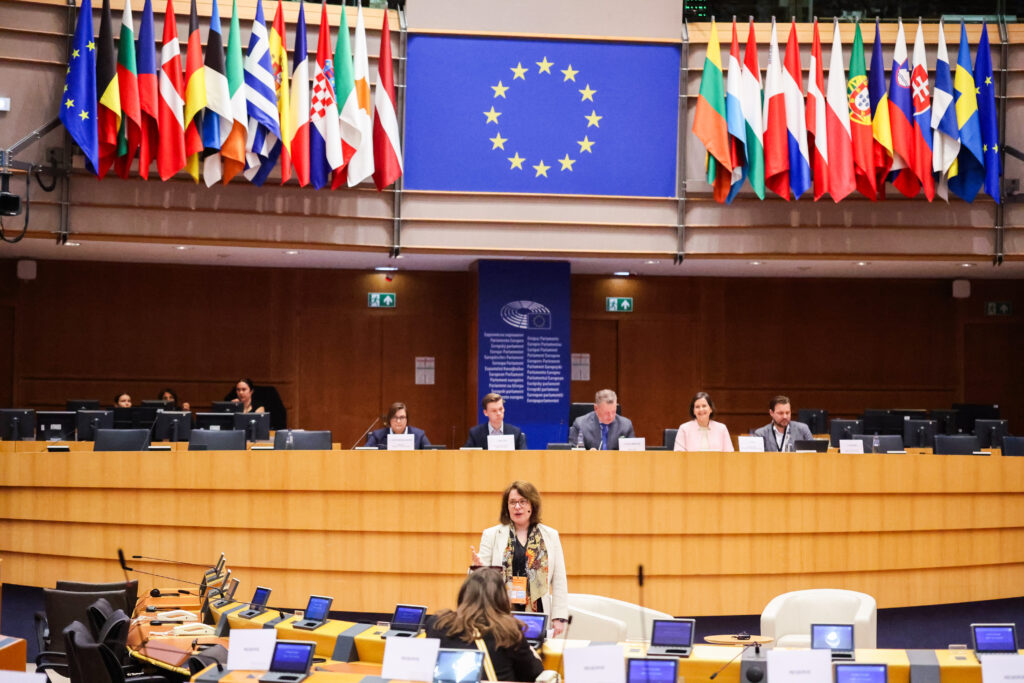
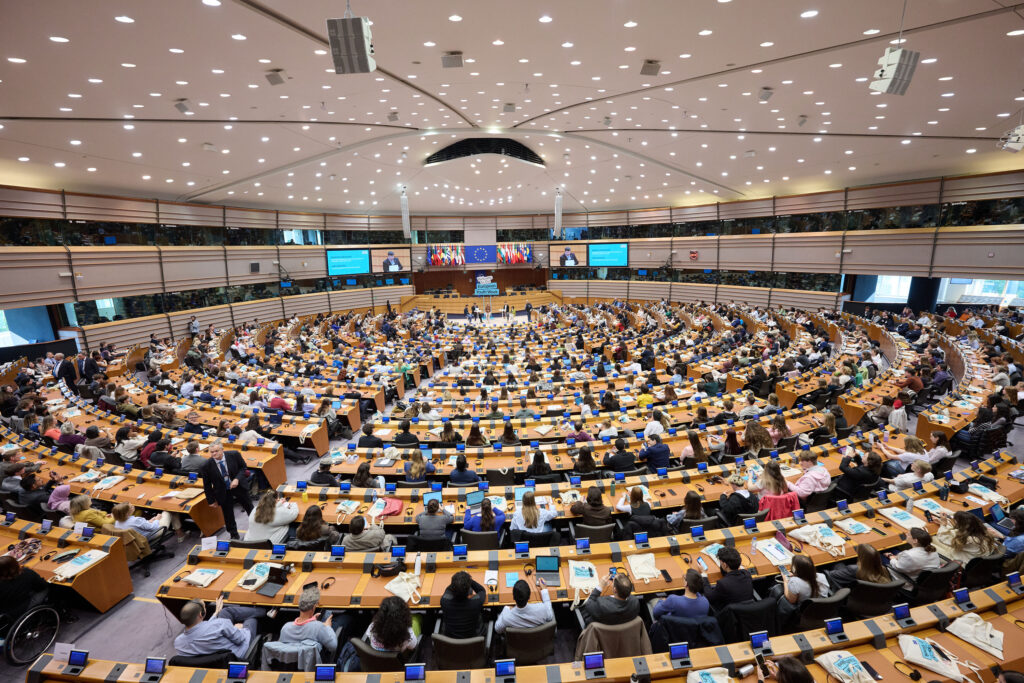
Only three days ago, I was also in this room, the hemicycle of the European Parliament. I played football with an European Commissioner as a warming up before we both spoke at an event here. Apparently, they don’t really like it if you play football here, so not only I; but also the European Commissioner […]

Read full speech
History and hope

Only three days ago, I was also in this room, the hemicycle of the European Parliament. I played football with an European Commissioner as a warming up before we both spoke at an event here. Apparently, they don’t really like it if you play football here, so not only I; but also the European Commissioner got kicked out by security. Why this matters, I will tell you later.

First of all. There are only two people in this world you need to make proud in your life. Your 90-year old self, and your 9-year old self.

One is a story of history, the other is a story of hope.

When you are 90 years old, you have a lot experience. When looking back, you don’t care about money or status, but what you actually did in your life. What is your heritage?

There is a Dutch saying that translates to ‘A donkey doesn’t bump into the same stone twice’, meaning that people learn from mistakes they made in the past. When you are 90 years old, you can see whether you’ve been a donkey or not.

With so much experience, you are also a history expert. You will come to the conclusion that we did not learn from history. Not because of what you studied, but just because you have been there.

If you are 90 years old today, you have been there during World War Two, you have seen the horrible consequences of discrimination, of making a particular group of people the scapegoat for all problems in society.

But, when you read the newspaper today, or look at your phone if you are a modern 90 year old, you see migrants are supposedly the reason of all problems we have, or gay people, or transgenders. You see again discrimination.

If you are 90 years old today, you have been there during the Cold War, you have had the fear of a war waiting to explode. In Eastern Europe, you have experienced how horrible it is to live in a dictatorship. But, you have also seen that hope wins from fear.

But today, you see people allowing wannabe dictators to dismantle democratic institutions. You see human rights and freedom of speech to be limited.

If you are 90 years old today, you have been there for a long time. You have seen it all. Across all protests, wars and revolutions, you have seen the dangers of marginalization. When people are being pushed towards the edge of society. With dangerous consequences.

But today, you see again that the opinions of certain people are worth less. Whether we speak about different racial groups, political minorities, or even whole generations. Like young people, who have to wait till they are older before their voice actually counts.

All world leaders deserve to have a 90 year old next to them as personal advisor. To prevent the donkey from bumping into the same stone twice.

Because, you have also seen how it does work: if you work together and respect each other. Look at where we are now, The European Union, which has the slogan ‘United in Diversity’. Where we are now, is the living proof that you can unite, not despite, but because of your different cultures, ideas, backgrounds… and generations.

When you can see that old people are not done with their lives, all grumpy and stuck in the past. No, we can use their experience.

But also when you can respect nine year olds. Because that’s the other person you have to make proud in your life.

A nine year old cares about the really important things: people, nature, the future.

Nine year olds don’t have a lot of history. But, they do have hope.

They can be naive. They can dream. They believe in things you lost all faith in.

And we have enough people saying what is not possible. We need people who can believe.

A nine year old dares to believe in world peace. Where we step up when schools, hospitals and cities are being destroyed. A world where we are not settling for anything less then peace.

A nine year old dares to believe in a world where every child can go to school. To have education. Also if their parents are poor, also if they are girls.

A nine year old dares to believe in a world where we take care of the ones that need it the most. Where poor families get support to survive. Where sick people can go to a hospital. A world where kindness is not the exception, but the rule.

All world leaders deserve to have a nine year old next to them, as a personal advisor.

Also, because children and youth can shake things up. Think about playing football in the hemicycle of the European Parliament with an European Commissioner, just to say something. To make politicians feel young again.

Having history and hope together in one room, you can create the greatest things.

So… let’s try. Please close your eyes

Think back to when you were nine years old

Dream as you dreamed

Believe as you believed

Be the hero you wanted to be

And imagine yourself as 90 years old

Judge yourself.

Would you be proud?

Would you be disappointed?

Are you a donkey who is running towards the same stone for the fifth time, or did you learn?

There are only two people you need to make proud in your life. Your 90-year old self, and your 9-year old self.

One is a story of history, the other is a story of hope.

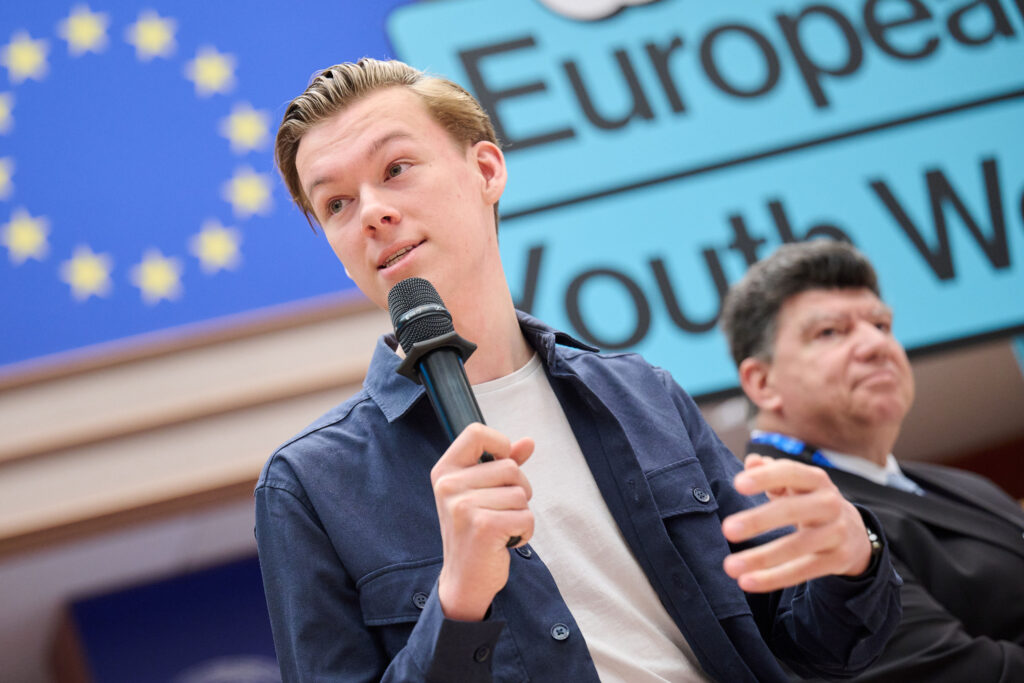
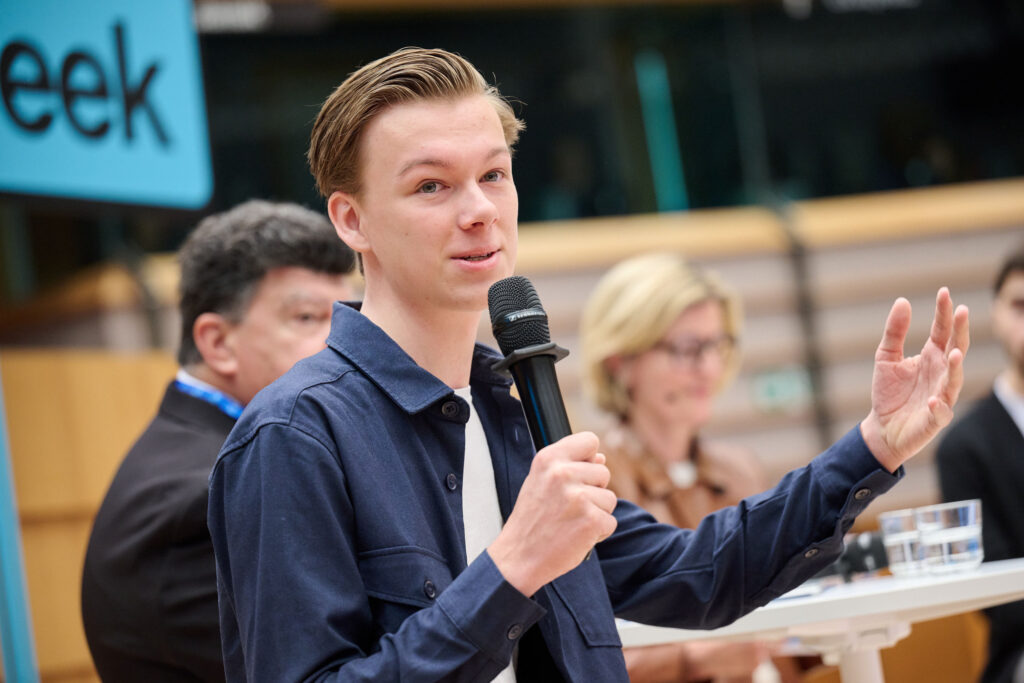
Kickoff Event European Youth Week · European Parliament, Brussels · 2026-04-24

How can I work with the UN? How can I speak at the EU?

Thank you. I get this question a lot. How can I work with the UN? How can I speak at the EU? But to be honest, I don’t know if it is the right question to ask. Because sitting here, speaking in the European Parliament, influencing EU policy… that should not be your goal. It […]

Read full speech
How can I work with the UN? How can I speak at the EU?

Thank you.

I get this question a lot. How can I work with the UN? How can I speak at the EU?

But to be honest, I don’t know if it is the right question to ask. Because sitting here, speaking in the European Parliament, influencing EU policy… that should not be your goal. It is a means. A way to achieve your goal. Something you actually want to achieve. Which can be a peaceful world. Gender equality. Education for all.  

What I would advice you is first to find out what you care about. What makes your heart beat faster. What is something you want to change in this world. Because at international organisations, there are enough people, young and old, whose goal it is to just BE there. Just be there, and then find out what I am actually going to do there.

So I would advice you first to find out what you want to do, and then find the right place where you can make a difference. If it is the UN, you’ll end up there. If it is the EU, you might end up in this room. But if you can make more impact in your university, your community centre or city council, then that’s where you should be.

Because it is not about you, or about me. It is about what you stand for.

And, because international organisations are not always open to young people. It is hard to make a change.

When I am at the United Nations, I know that with 19 years old, I am the youngest in the room. I know I have the least experience. I know some people expect me to sit back and stay quiet.

And for a long time, I thought I needed to pretend to be someone else just to be taken seriously.  Hide my age behind a fancy suit and an expensive tie. Hide my inexperience behind difficult language. Hide my idealism behind a serious face.

But I realised something. The power of young people is exactly that.

We are young; so we raise the topics that matter to our generation. We are inexperienced; so we come up with new, bold ideas. We are idealistic; so we dare to believe in things that might seem impossible.

And the only reason it is interesting for politicians, policy makers, or diplomats to meet you… is because of your perspective, your struggles. Your dreams.

So never hide yourself. Never let anyone tell you that you are too young to be heard. Because the fact that you are young, that you are still learning, still questioning and still dreaming, is exactly the reason you deserve to be at the table.

UN@80: Bridging Generations - Youth and Legacy in Multilateralism · United Nations HQ, New York · 2025-10-09

Dream as you dreamed when you were my age

I am eighteen years old Many would call me naïve. Many would call me too young. Many would call me too inexperienced. And I agree with all of them. I am inexperienced, I am young and I am naïve, but I would rather call it idealistic. And although I do not know how to be […]

Read full speech
Dream as you dreamed when you were my age

I am eighteen years old

Many would call me naïve. Many would call me too young. Many would call me too inexperienced.

And I agree with all of them. I am inexperienced, I am young and I am naïve, but I would rather call it idealistic. And although I do not know how to be a good diplomat, have to use a dictionary when reading UN resolutions and although I am getting lost all the times in these buildings, I do have the ability to dream, to believe.

I believe that we can stop the devastating consequences of global warming. I believe that we can be the first generation of a new, peaceful world order. I believe that we can take care of the ones that need it the most.

And I dream about being the hero that accomplished this all.

And I think that’s the power of young people, the fact that we can be naïve, can be idealistic, the fact that we can dream and the fact that we can believe.

So I want to invite you: dream as you dreamed when you were my age, believe as you believed when you were my age. And be the hero you wanted to be when you were my age.

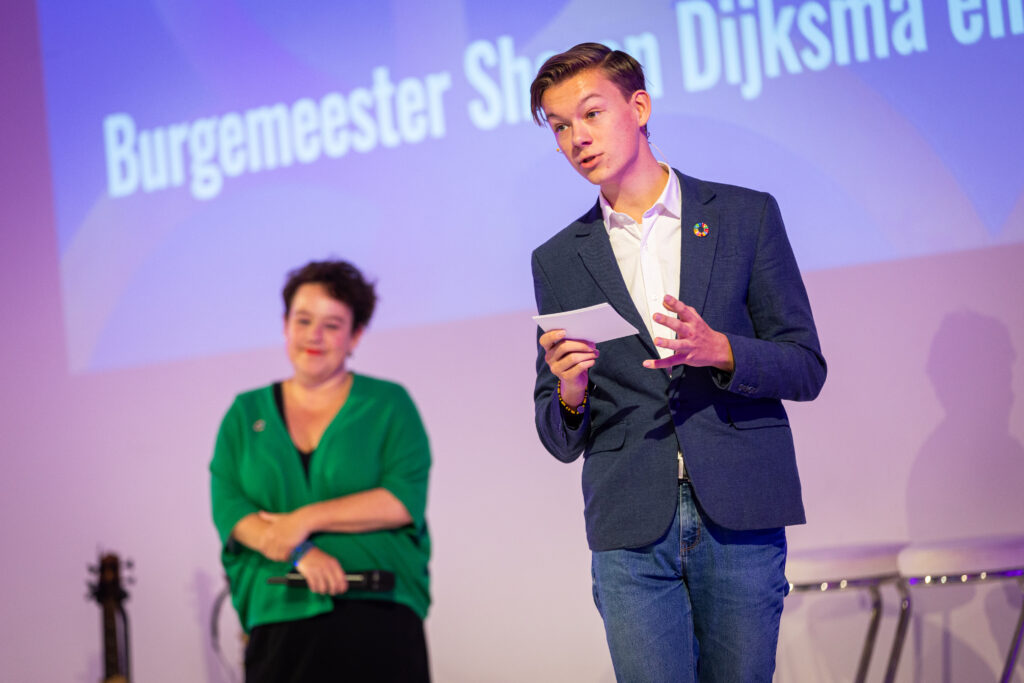
SDG Action Day · Utrecht, The Netherlands · 2024-09-25

Het jaar 2074 door de ogen van mijn kleinzoon

Mijn naam is Lars Westra, ik ben 17 jaar oud. Maar door de jetlag voel ik me echt 50 jaar ouder, ik kom namelijk net terug van de Summit of the Future in New York. Nou is dat op dit moment niet heel erg, want ik wil jullie ook 50 jaar meenemen in de tijd, […]

Read full speech
Het jaar 2074 door de ogen van mijn kleinzoon

Mijn naam is Lars Westra, ik ben 17 jaar oud. Maar door de jetlag voel ik me echt 50 jaar ouder, ik kom namelijk net terug van de Summit of the Future in New York. Nou is dat op dit moment niet heel erg, want ik wil jullie ook 50 jaar meenemen in de tijd, naar de toekomst, dus…. Welkom in het jaar 2074, vanuit de ogen van mijn kleinzoon.

Vandaag vierde ik mijn achtste verjaardag, mijn opa en oma kwamen langs. Van hen kreeg ik een klein potje van iets wat ik niet herkende. Het zag er glinsterend uit, met een soort gouden gloed. Ik vroeg wat het was, en mijn opa moest slikken. Ik merkte dat hij verdrietig werd toen hij zei: ‘Het is honing’. Ik wist helemaal niet wat honing was, dus vroeg ik hoe het gemaakt wordt. ‘Dit wordt niet meer gemaakt,’ zei mijn opa, ‘het werd gemaakt, vroeger’. ‘Bijen maakten dit,’ vulde mijn oma aan, ‘kleine beestjes.’ Ik was erg verbaasd, ‘Kan een klein beestje dit maken?’ Mijn opa antwoorde: ‘Jazeker, dat iets misschien klein is, betekent niet dat het geen grote dingen kan.’ Ik vond het magisch. Mijn opa vervolgde: ‘Hadden ze dit vroeger maar ingezien. Waren ze vroeger nou maar doorgegaan met de kleinste mensen uit te nodigen aan de grootste tafels, dan had de wereld er waarschijnlijk nu heel anders uitgezien. Het leek even goed te gaan. Ze luisterden naar ons, we kregen een plek aan de grote tafel. We mochten meepraten met bedrijven, organisaties en zelfs overheden. Ze luisterden toen we ons zorgen maakten, toen we ze vertelden wat wij belangrijk vonden. We wisten dat we door elkaar te respecteren, tot de mooiste dingen konden komen. Want alleen samen konden we problemen oplossen, en de wereld een stukje mooier maken. Even waren we gelijkwaardig, konden wij hen helpen, en zij ons. Steeds vaker voelden we ons gehoord, en voelden we dat we impact maakten. Het was zó eenvoudig om deze goede lijn door te trekken. We wisten hoe het moest en wij, de kinderen, stonden te springen om te helpen. Toch kregen we niet het podium waar we op het einde zelfs voor smeekten.’ ‘Weet je,’ zei mijn oma, ‘Sommigen van hen waren niet eens meer op deze aarde toen de bijen uitstierven. Laat staan dat ze nu zien hoe ze de aarde hebben achtergelaten. Ik zou willen dat we terug konden in de tijd, naar toen we het nog hadden kunnen redden.’ Ik vroeg haar naar welk jaar we dan zouden moeten gaan, wat het omslagpunt was. Zonder twijfel zei ze: ‘2024.

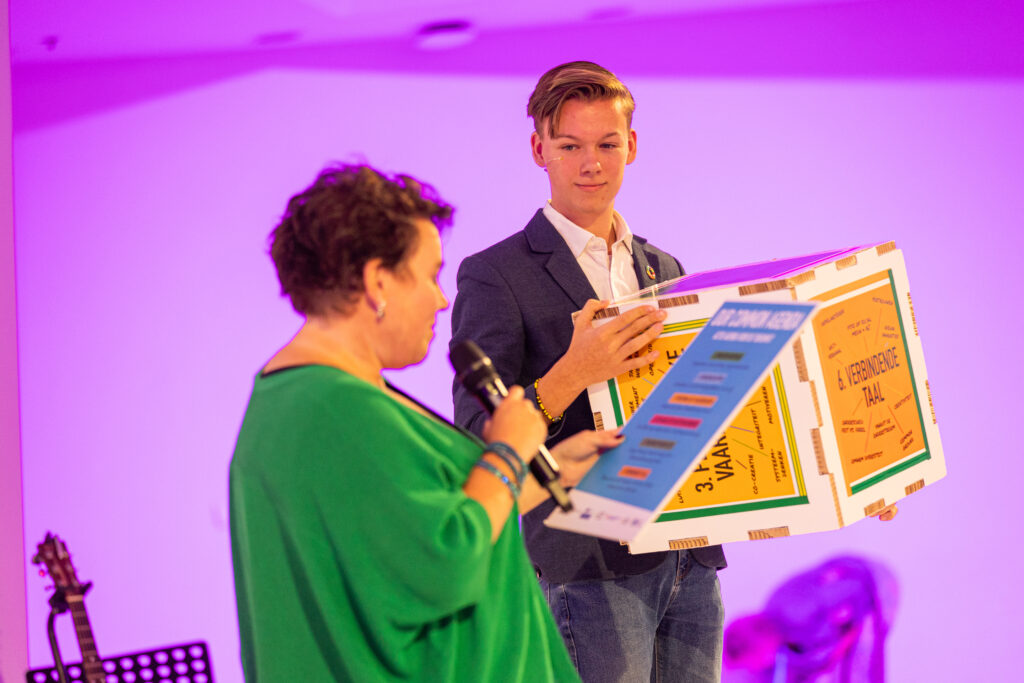
Dat was het jaar waarin het leek dat we jeugdparticipatie konden gebruiken om de verwoesting van onze aarde en onze maatschappij tegen te gaan.’ ‘Sterker nog,’ vulde mijn opa aan, ‘een grote groep jongeren had een soort agenda gemaakt, voor de toekomst. Voor hoe jouw leven eruit zou moeten zien. En ik mocht die presenteren voor honderden volwassenen met nette kleren en de burgemeester van Utrecht op een groot congres.’ ‘Maar opa,’ vroeg ik, ‘stond er in die agenda dan dat mensen minder met elkaar moeten gaan praten? Want bij geschiedenis heb ik geleerd dat mensen vroeger een praatje maken als ze elkaar tegenkwamen met boodschappen doen of op de sportclub’. Nee zeker niet, reageerde hij. Er stond juist in dat er meer ontmoetingsplaatsen in wijken moesten komen, om polarisatie tegen te gaan’. Toen ik knikte grinnikte mijn oma triestig. ‘Weetje’, zei ze, ‘vroeger vonden we polarisatie een moeilijk woord. ‘Vroeger smeekte je opa die nette mensen in die grote zaal om begrijpelijke taal te gebruiken, taal die kon verbinden in plaats van verdelen.’ ‘Dat is helaas ook niet gelukt’, vulde mijn opa aan. ‘Want hoewel polarisatie door iedereen gebruikt wordt, en niemand meer twijfelt op welke letter die puntjes moeten in het woord egoïsme, kan denk ik niemand in jouw klas vertellen wat persoonlijke ontwikkeling, intergenerationele solidariteit of de afkorting sdg betekent. En dat terwijl ik het hun overgrootouders nog zo goed heb uitgelegd toen ze allemaal in hun mooiste kleren naar de jaarbeurs kwamen.’ ‘Maar luisterden ze dan niet?’ Vroeg ik.

‘Jazeker wel’, reageerde mijn opa. Na afloop kreeg ik een groot applaus en kwamen er allemaal mensen naar me toe om te vertellen hoe knap ze het wel niet vonden.’ Maar het was niet hun taak om mij te complimenteren, of een mooie LinkedIn post te maken, het was hun taak om die toekomstagenda uit te voeren! Het was hun taak om in te zetten op persoonlijke ontwikkeling, om de SDG’s die op mijn borst pronkten generatie op generatie door te geven. Ze moesten een visie vormen op de toekomst. Niet op morgen of overmorgen. Maar op jouw leven, hier in het jaar 2074. Maar bovenal moesten ze blijven praten, praten met buurgenoten, met mensen uit andere generaties, of met andere meningen of perspectieven. Als zij leiderschap hadden getoond, had dat ervoor kunnen zorgen dat de bijen nu nog leefden, en jij niet had geweten wat polarisatie betekende.

Ze hadden allemaal stuk voor stuk een eigen verantwoordelijkheid, ook de burgemeester. Zij konden ervoor zorgen dat jij een geweldige toekomst zou krijgen in de mooist denkbare wereld. ‘Maar’, vroeg ik, ‘Wat weerhield ze ervan?’

Daar wil ik onze tijdreis mee eindigen, wat weerhoudt je ervan? Is datgene echt zo belangrijk om onze toekomst op het spel te zetten door niet meer die buurman te praten die een andere politieke voorkeur heeft? Door niet te blijven praten en je te ontwikkelen. Want daar draaien deze zes punten om. Praten, en leren. Iets waar we nooit mee mogen stoppen.

En het kan nog, de toekomst staat niet vast, maar ligt wel in onze handen.

Dank jullie wel

Invite Lars

For speaking enquiries.

Contact →